How do subsea motion sensors work?
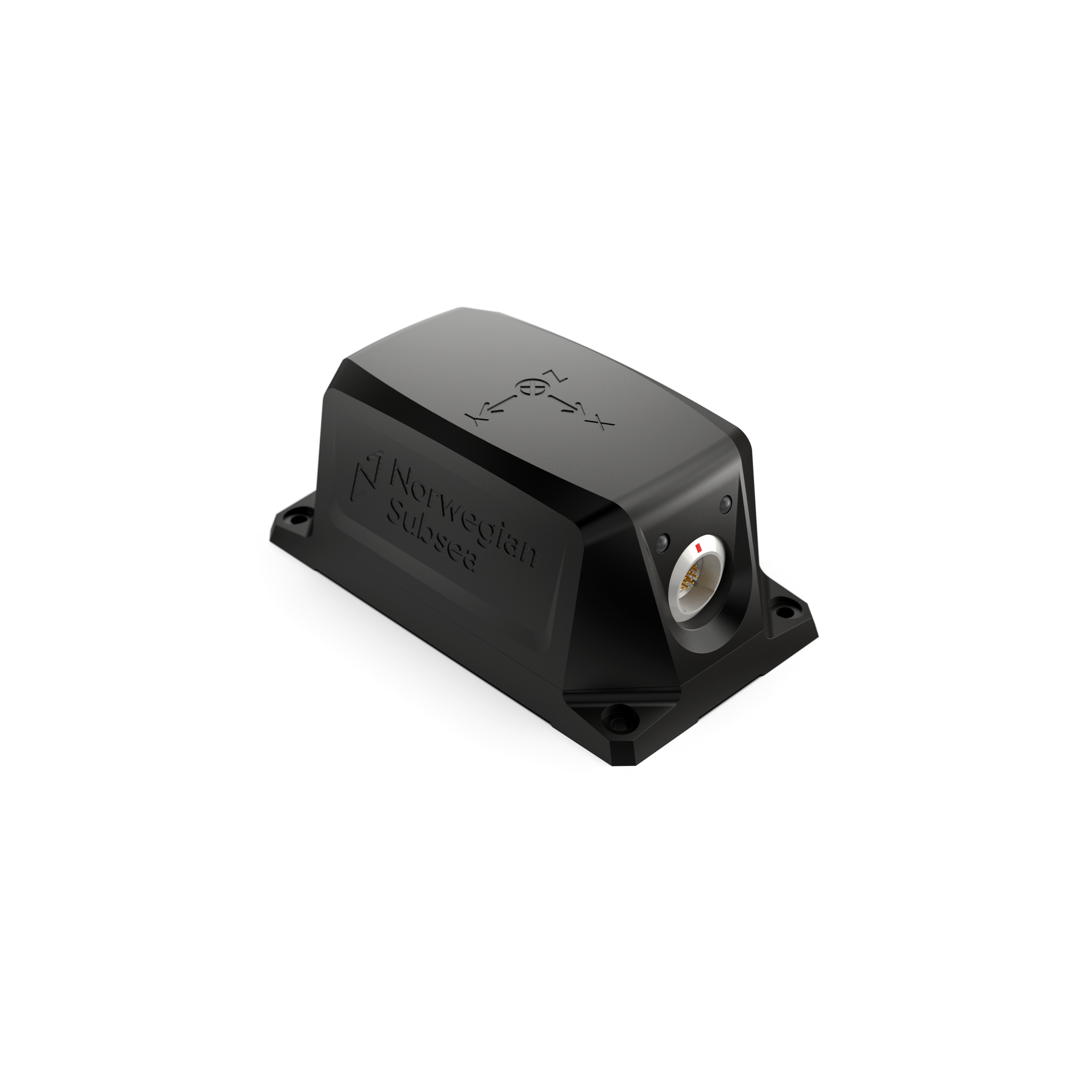
Subsea motion sensors, such as the Norwegian Subsea MRU Subsea, are designed to accurately measure motion in demanding underwater environments. They typically utilize state-of-the-art Micro-Electro-Mechanical Systems (MEMS) inertial sensors, including accelerometers and gyroscopes, to detect linear accelerations and angular rates.
The core functionality relies on sophisticated sensor fusion algorithms. These algorithms process the raw data from the individual MEMS sensors in real-time, intelligently combining them to compute precise measurements for up to six degrees of freedom (6DoF): Roll, Pitch, Yaw (orientation), and Heave, Surge, Sway (linear motion). This ensures high accuracy and stability even during complex dynamic movements.
For reliable subsea deployment, these sensors are housed in robust, pressure-resistant enclosures. Our MRU Subsea, for example, features a compact titanium housing rated for 6000 meters water depth and utilizes industry-standard Subconn wet-mateable connectors. Data output via common protocols like Ethernet and RS-232/RS-485 facilitates straightforward integration with various subsea systems, including ROVs, AUVs, and survey equipment.
Norwegian Subsea also offers specialized versions, like the Subsea Inclinometer/VRU, which provide high-accuracy Roll and Pitch data for applications where full 6DoF measurement is not required, offering a focused and cost-effective solution.