Many suppliers tend to present test data solely for simple regular sine motions. Unfortunately, vessels experience irregular and coupled motions at sea. While most sensors perform well in sine wave motion, only a select few excel in irregular motions at sea. Our Motion Reference Units stand out as they consistently deliver exceptional performance across all conditions.
| Location | Motion Lab, University of Agder, Grimstad, Norway |
| Motion Reference Platform | Bosch Rexroth eMotion-8000 hexapod with laser position measurements |
| Tested MRU | MRU 6000 Marine |
| Test purpose | Verify that the Norwegian Subsea MRU meets the specifications and demonstrates typical MRU performance in realistic sea conditions |
| Test setup | Two Norwegian Subsea MRUs and two other MRUs were mounted on top of a hexapod and the MRU output was compared to the reference measurements from the hexapod (truth). |
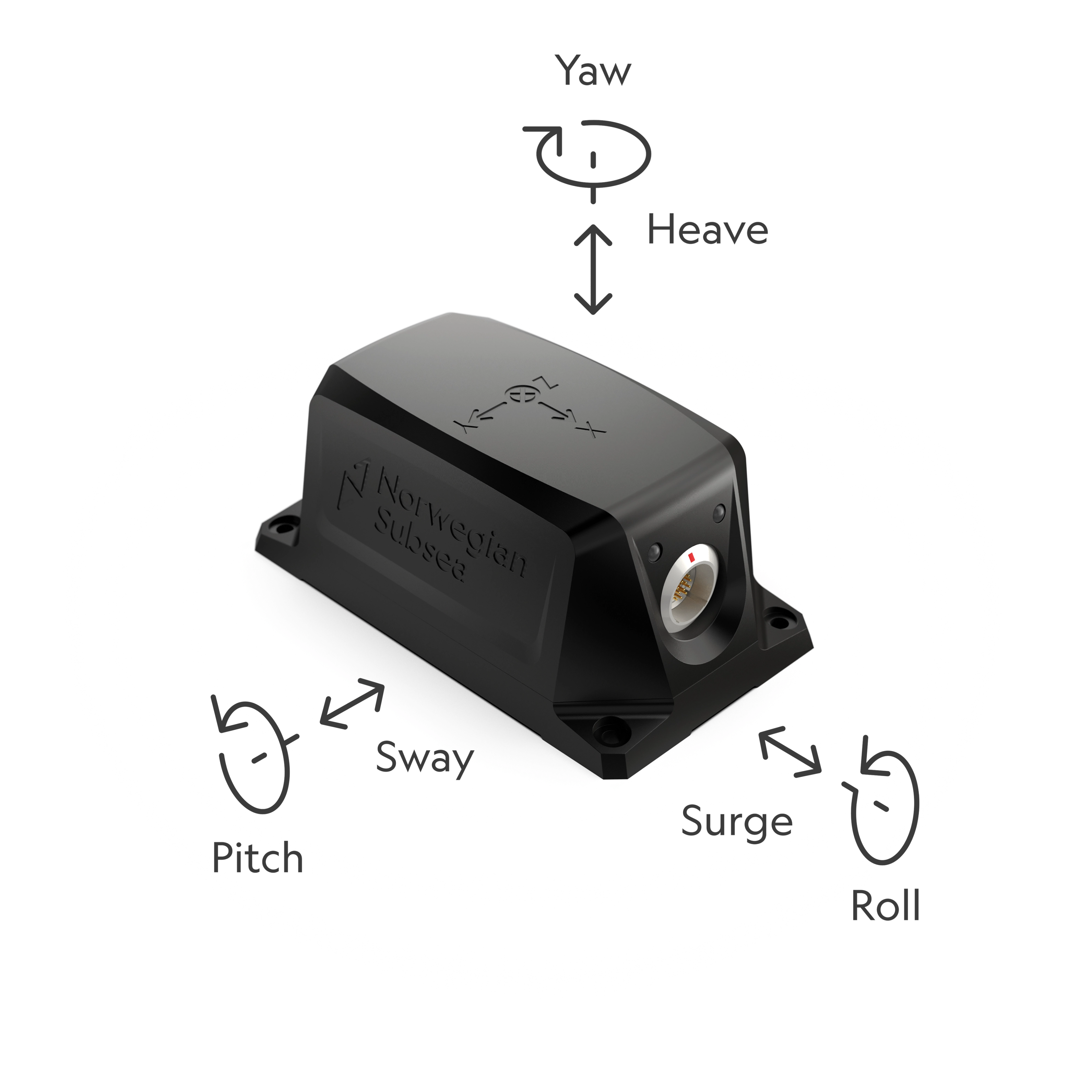
| Tested scenarios | Regular and irregular sea-state conditions Based on real sea conditions Single and multi-axis coupled motions Motion periods from 3 to 25 seconds Amplitudes from 0.1 to 0.8 m Roll and pitch from 0° to 10° degrees All 6 degrees of freedom (DOFs) were tested individually and combined (coupled motions) |

Irregular motion profile with significant amplitude of 5 degrees and peak period of 10 seconds.
The test starts and stops with the MRU in the horizontal position (0 degrees).
The roll and pitch RMS error is calculated over the entire test duration of 350 seconds.

The Heave test has an irregular motion profile with a significant amplitude of 0.5 m and peak period of 7 seconds. The Heave filter uses automatic estimation of significant amplitude and peak period to optimize the performance.
The Heave RMS error is calculated over the entire test duration of 250 seconds, with very accurate results.
For reference, an MRU from another brand, with comparable Heave accuracy specifications, was included in the tests. This MRU performed well in sine waves, but in real sea conditions, it was unable to provide useful results.

Test results are well within the datasheet specifications
Datasheet specification: 0.02°
Result: 0.016°
✓ Approved
Datasheet specification: 0.02°
Result: 0.014°
✓ Approved
Datasheet specification: 0.05 m or 5.0 %
Test results: 0.017 m
✓ Approved
Datasheet specification: 0.02 m/s or 3.0 %
Test results: 0.011 m/s
✓ Approved

Norwegian Subsea produces industry-leading Motion Reference Units (MRUs) for subsea, marine, and land applications. Our MRUs are robust and affordable, and offer high-accuracy performance, along with a plug-and-play interface.
Over 1400 Norwegian Subsea Motion Reference Units are in operation world-wide on over 700 vessels, floating and subsea structures.
Some selected customer references.

Ultrabeam, a specialist in hydrographic survey and underwater inspection, relies heavily on precise motion compensation to ensure accuracy in their 3D mapping projects. By integrating Norwegian Subsea’s compact, calibration-free Motion Reference Units (MRUs), Ultrabeam has significantly improved its survey data accuracy, while enjoying simplified integration, and enhanced operational efficiency in diverse surveying environments, from bridges, to offshore installations.

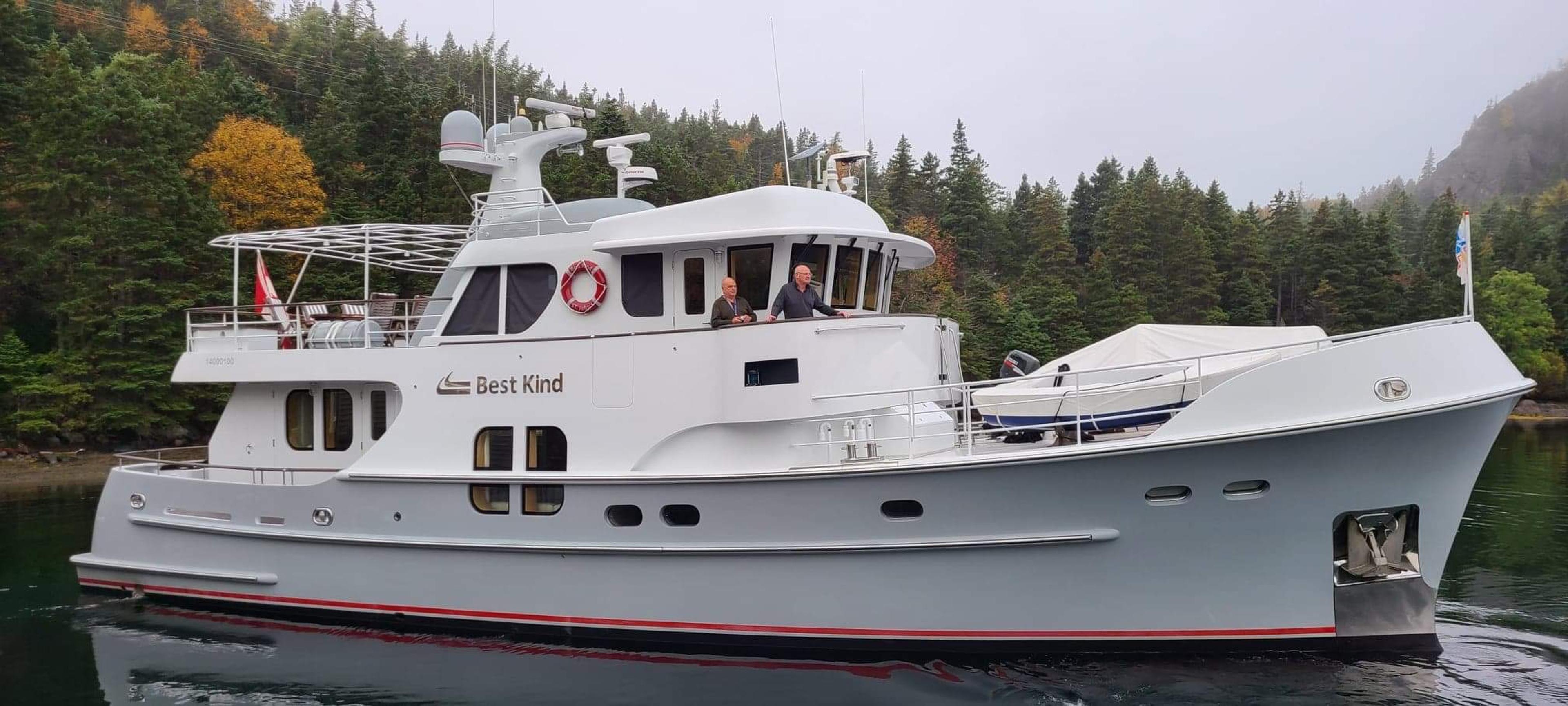
Motion Reference Units (MRUs) are crucial in bathymetric survey technology, providing precise motion compensation data to ensure reliable and accurate seafloor mapping. For users like Captain Sid Hynes, a seasoned mariner exploring Newfoundland’s shipwreck-rich waters, the Norwegian Subsea MRU has redefined what is possible, delivering exceptional performance even in incredibly challenging conditions.

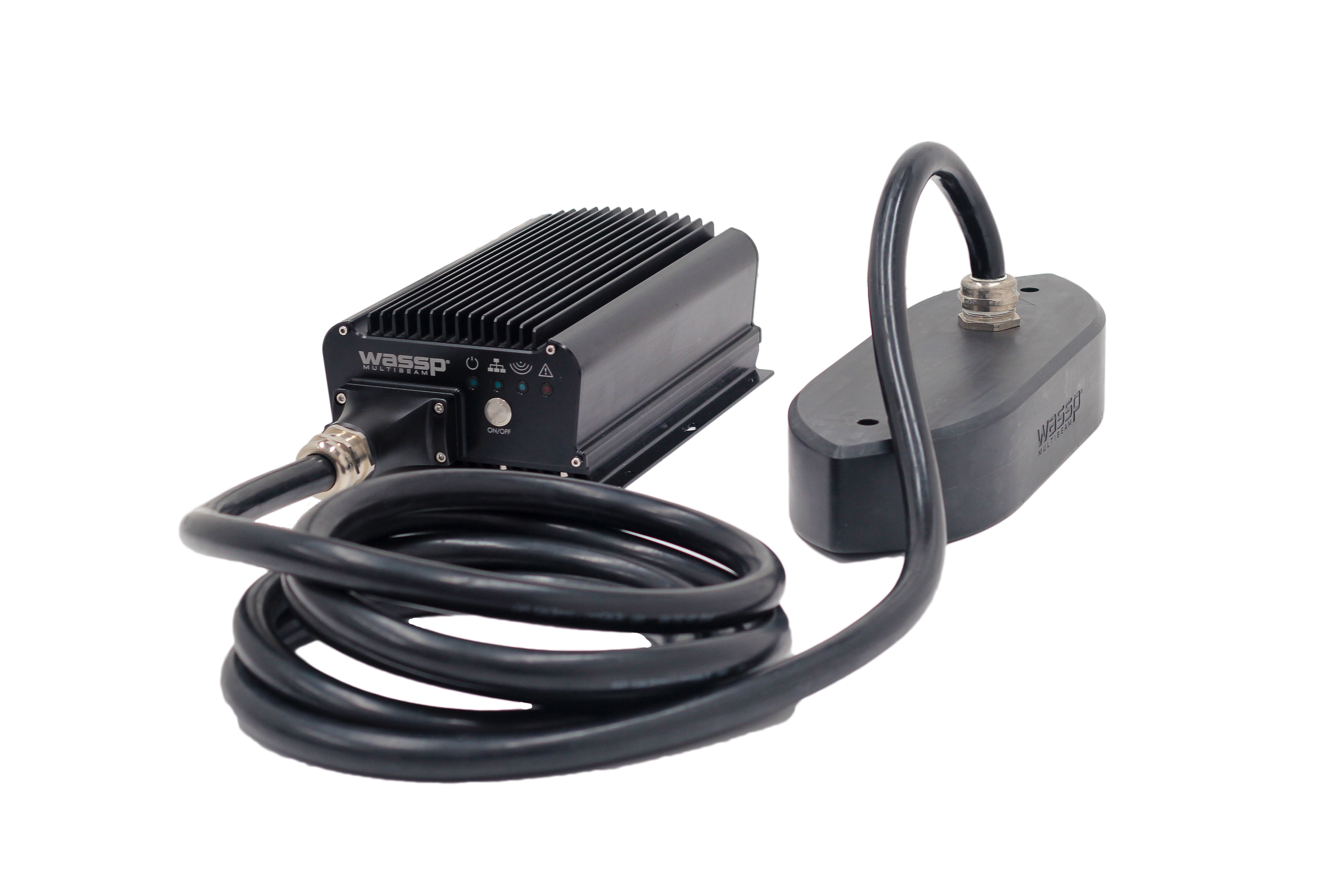
Norwegian Subsea’s Motion Reference Units (MRUs) are now available integrated with WASSP’s multibeam sonar systems, offering enhanced motion data accuracy and performance for offshore applications.