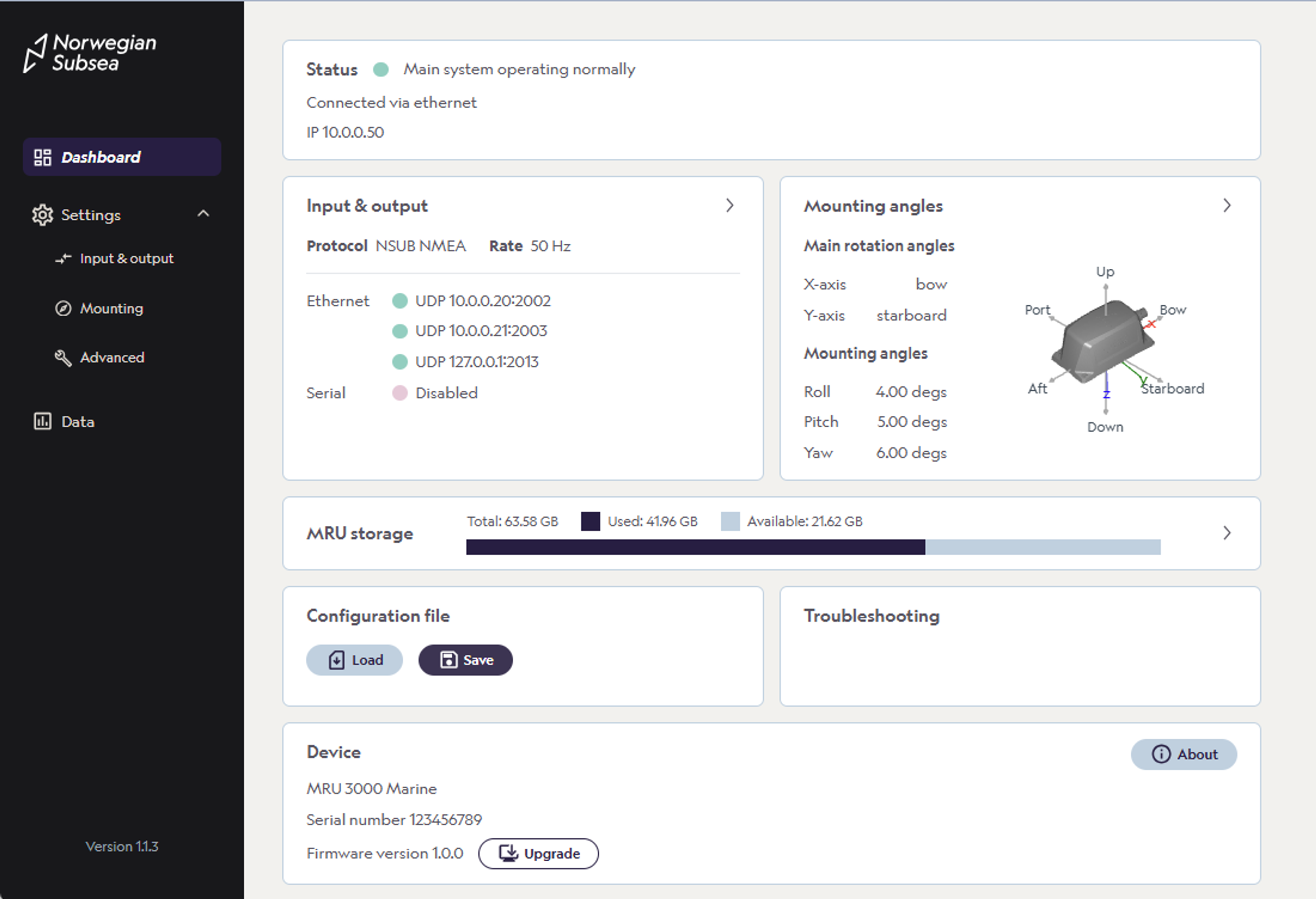
All Norwegian Subsea Motion Reference Units (MRUs) can be easily configured using the web-based configurator.
Configuration settings of the MRU consists of:
The configurator is also a great tool to monitor the outputs in real-time, plot the variables, check the on-board diagnostics and update the MRU firmware.
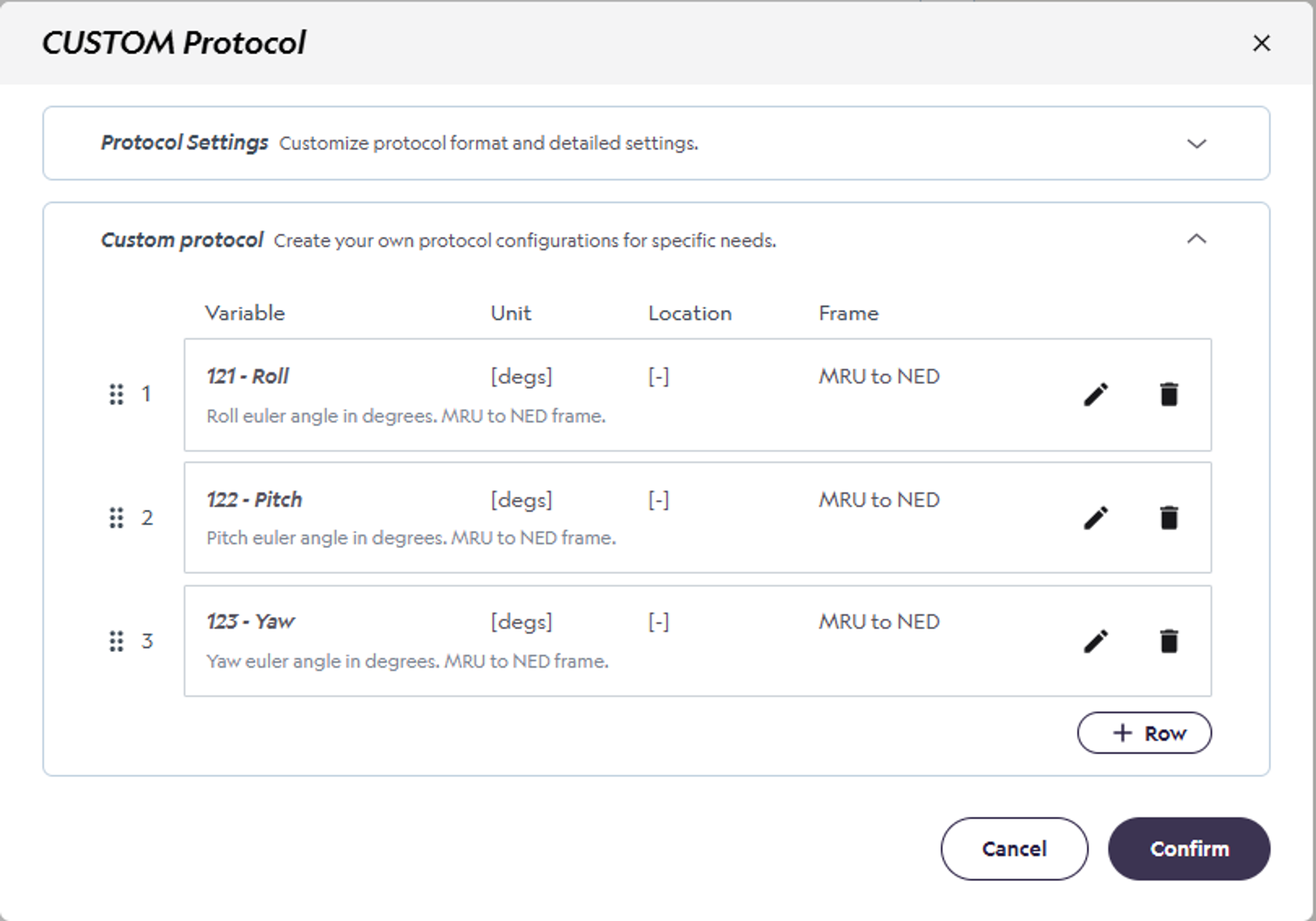
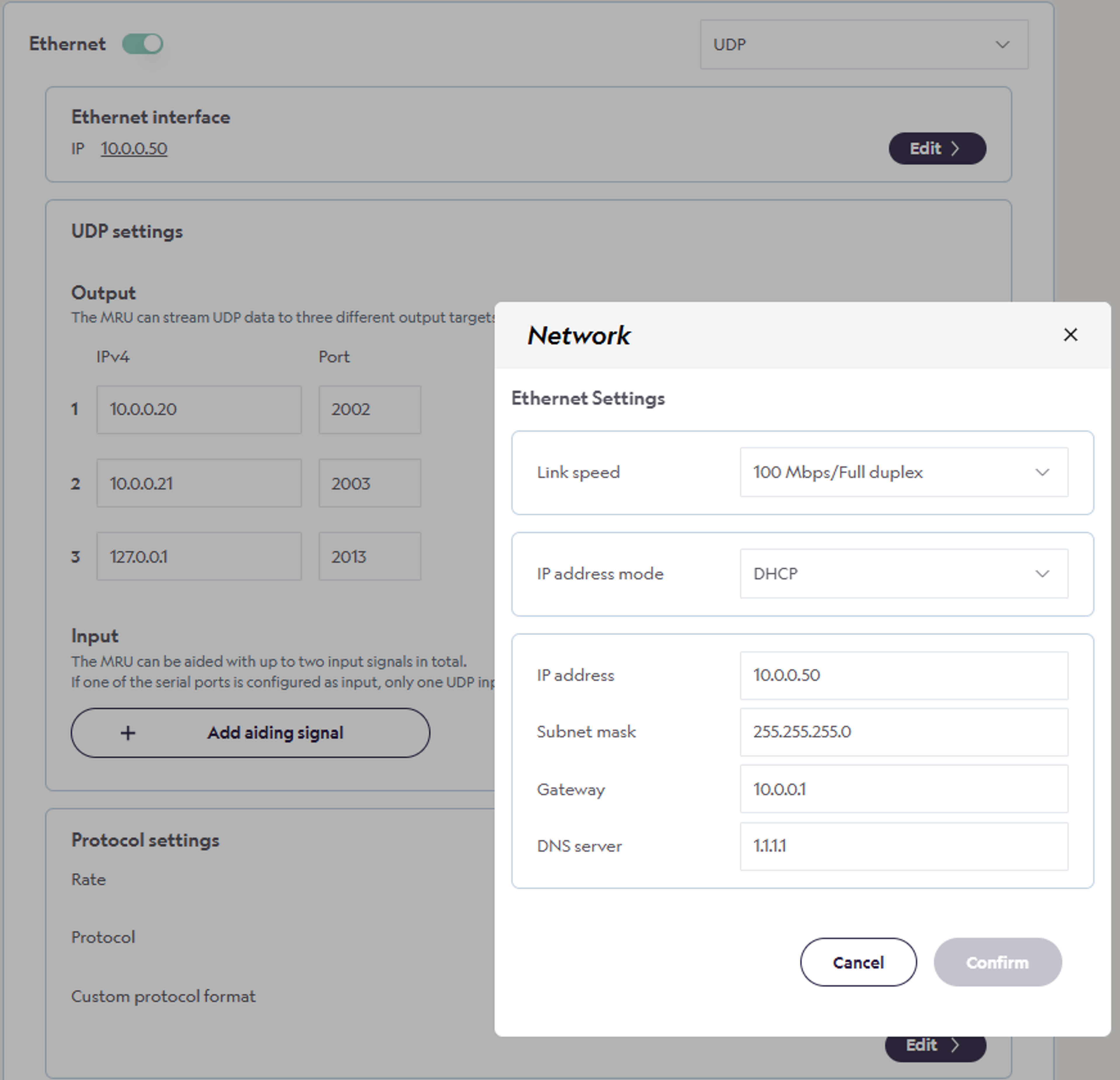
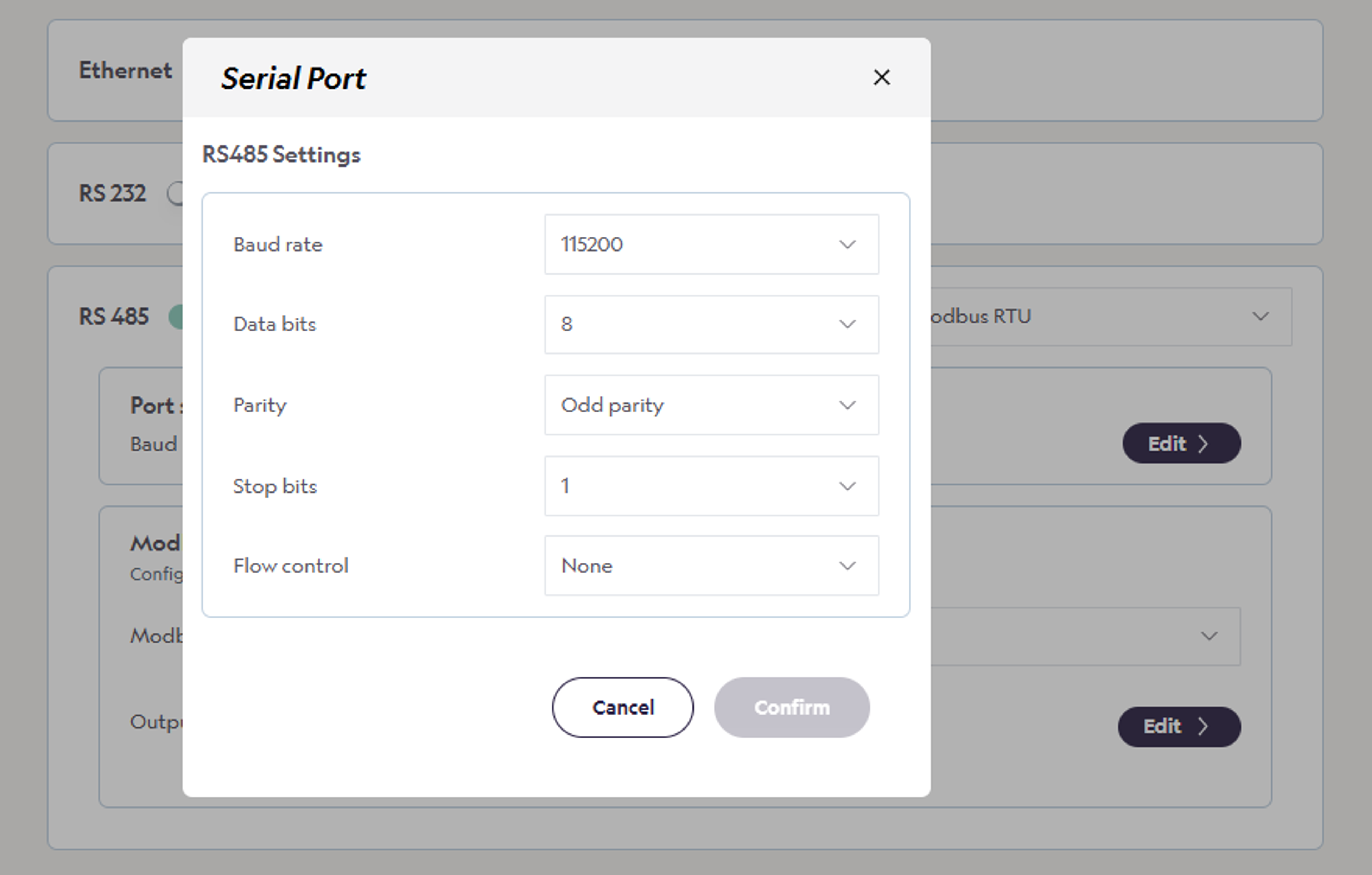
The MRU configurator guides you through the choosing the communication ports and protocols.
The MRU supports Ethernet UDP, Modbus TCP, Ethernet/IP, RS-232, RS-485, 2-wire RS-485, Modbus RTU, analog +/- 10 V, analog 4-20 mA and more.
We recommend to define your own custome binary or NMEA protocol, providing you full control over your data.
Alternatively, choose from a variety of industry standard output protocols such as ATLAS, GYROCOMPAS1, IFREMER VICTOR, MDL, Tokimek PTVG, RDI ADCP, SMCA , SMCC , SMCCg, Simrad EM 3000 and TSS1.


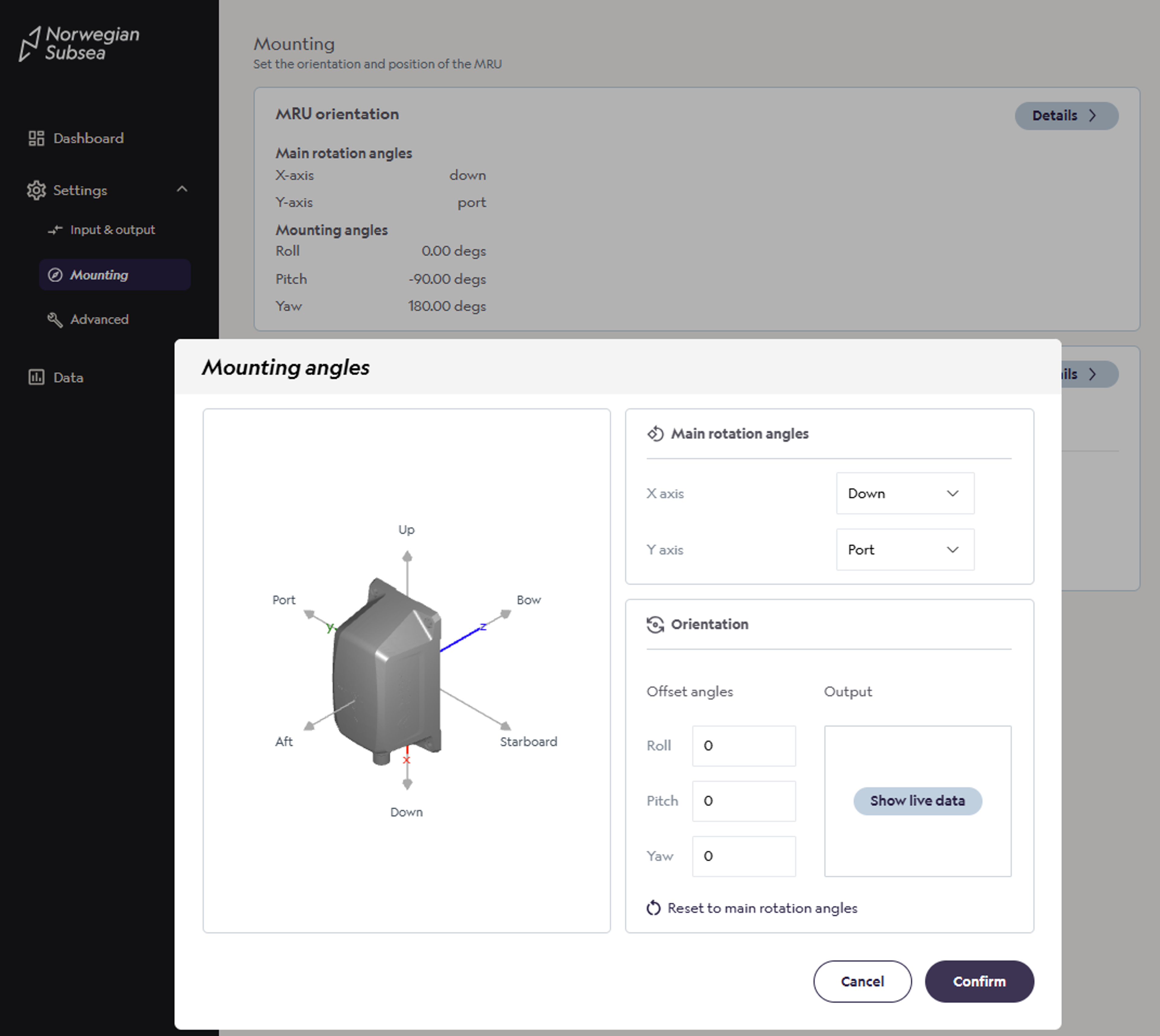
You need to define the direction in which the MRU is mounted with respect to the ships axes.
First the main rotation angle, in this case the MRU x-axis is in the down direction and the MRU y-axis in the Port direction.
Next you specify the offset from the main rotation angles.


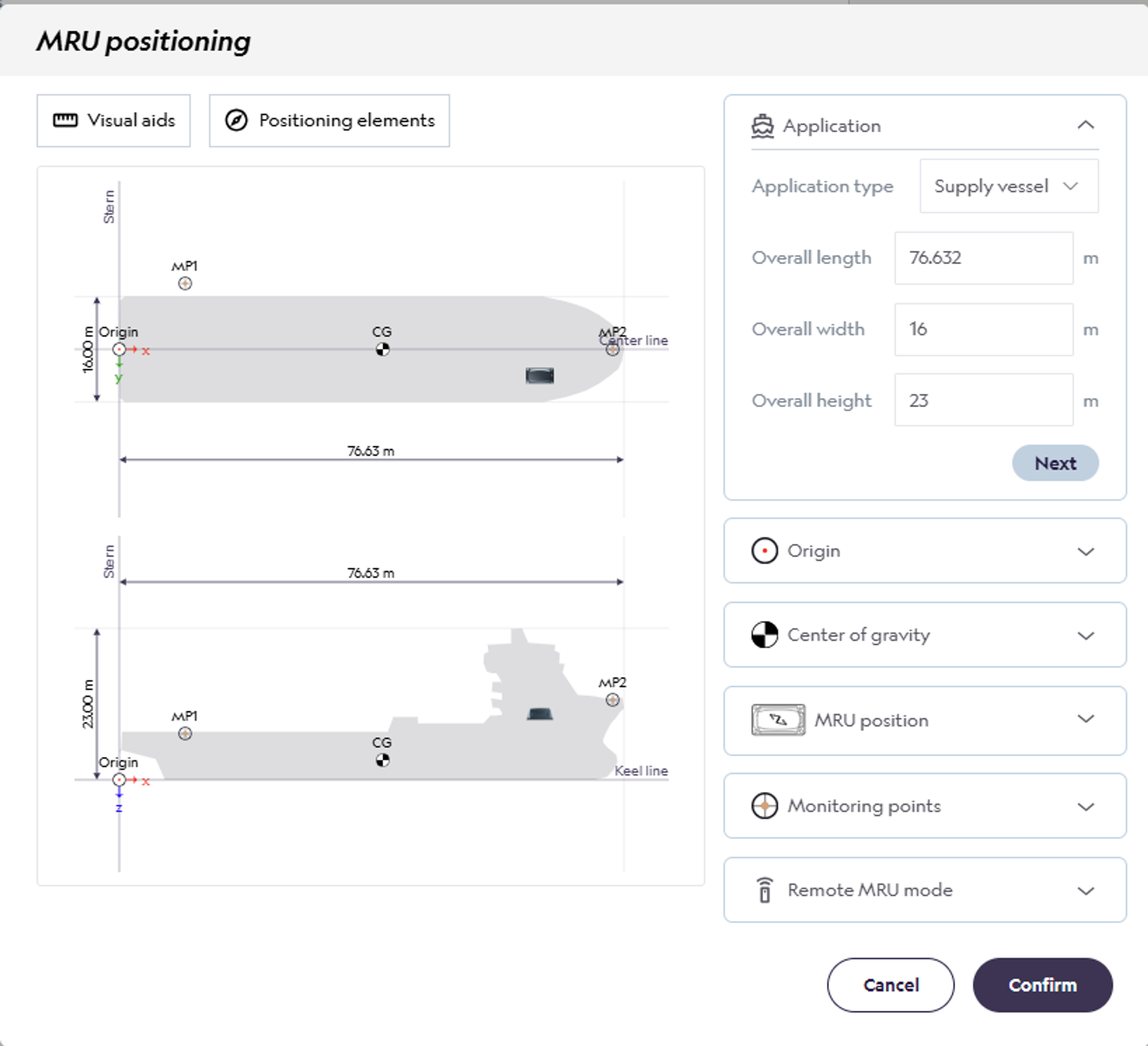
For translational motions, heave, surge and sway, we need to define the position of the MRU with respect to the ships reference.
In this case the MRU is positioned in the front of the ship.
The MRU can calculate heave, surge and sway in 2 monitoring points. This could be the tip of a crane. The monitoring point location can be updated in realtime.
The Centre of Gravity can be defined but is only used as a 3rd monitoring point, so you do not need to define the CoG.
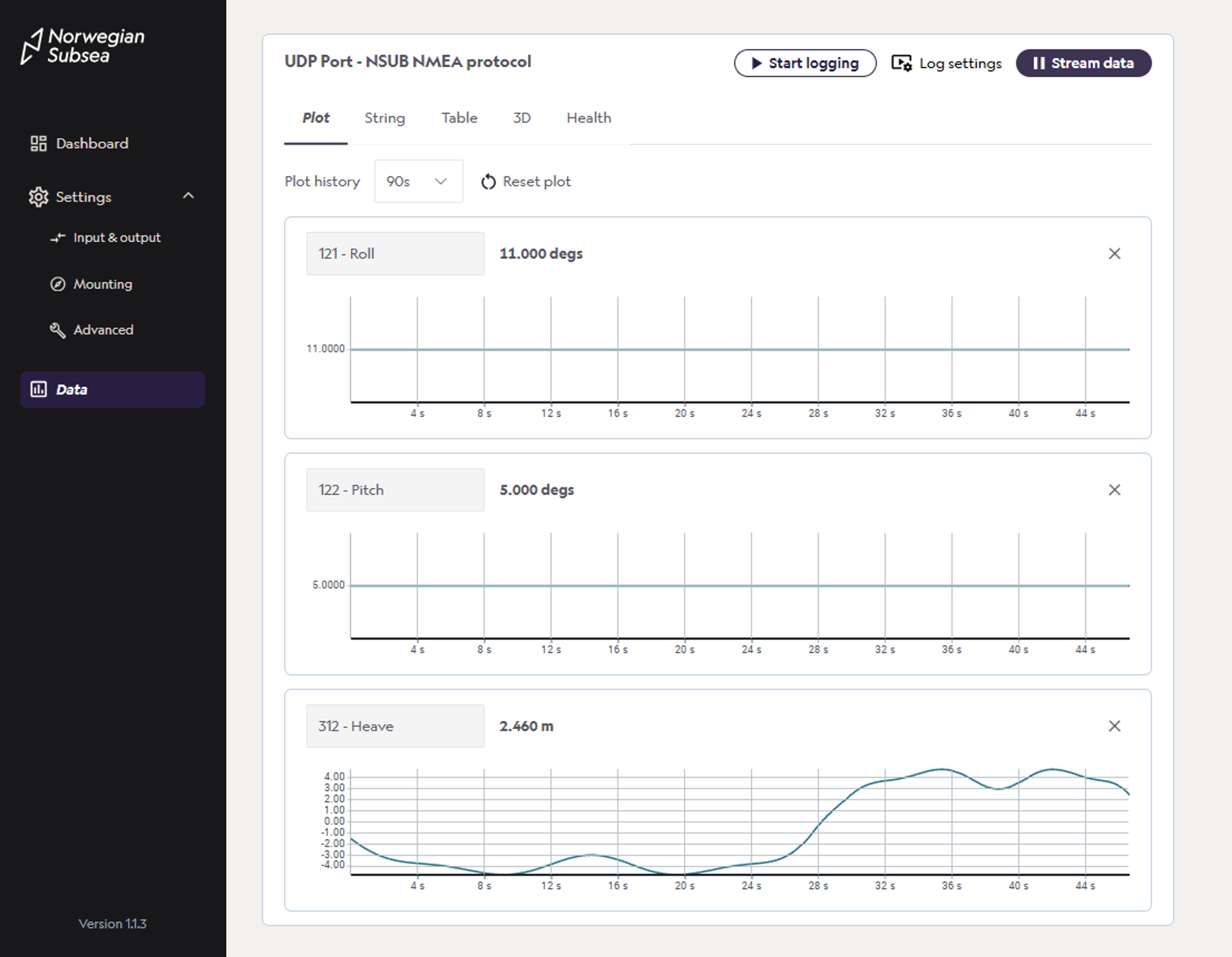
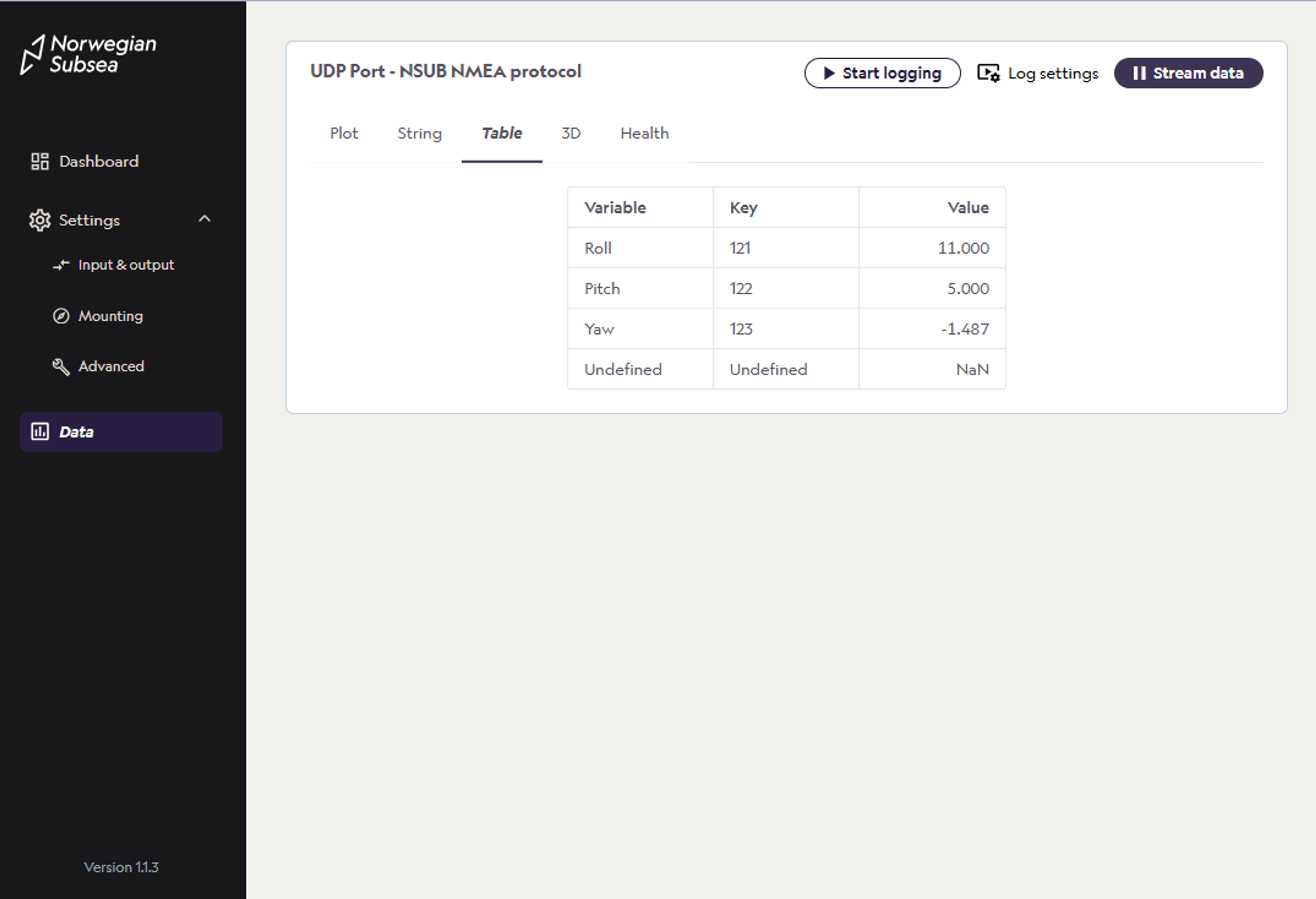
The MRU configurator can be used to view the MRU output data in real-time. This can be done in a plot view, data string, table view and 3D view.
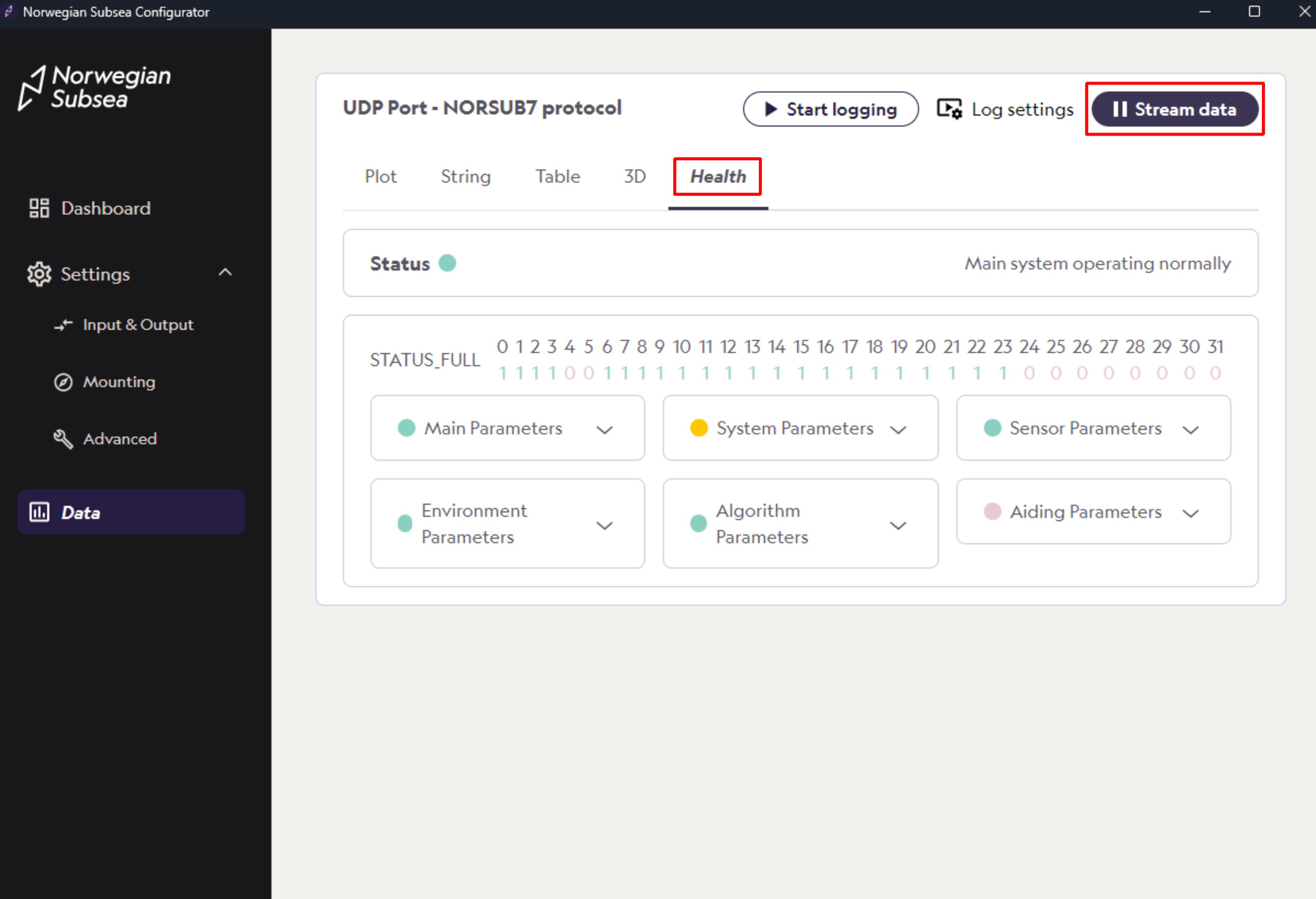
In addition, there is a MRU health status page that displays any fault warnings from the onboard diagnostic system.